- Commissioner’s statement on Ventura, Marte
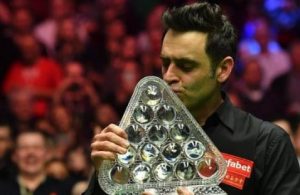
- Ronnie O’Sullivan: Masters champion ‘felt so vulnerable’ in final
- Arron Fletcher Wins 2017 WSOP International Circuit Marrakech Main Event ($140,224)
- Smith challenges Warner to go big in India
- Moncada No. 1 on MLB Pipeline’s Top 10 2B Prospects list
- Braves land 2 on MLB Pipeline’s Top 10 2B Prospects list
- Kingery makes MLB Pipeline’s Top 10 2B Prospects list
- New Zealand wrap up 2-0 after Bangladesh implosion
- Mathews, Pradeep, Gunathilaka to return to Sri Lanka
- Elliott hopes for rain for Poli
Great Britain: The Rising Tide Of Rio 2016 Built On Palmer’s Plea Of Atlanta 1996
- Updated: August 23, 2016
Editorial
The nose cone was painted gold, the name of the British Airways craft “victoRIOus“, the 747 loaded with the athletes who won 27 gold atop 67 medals for Great Britain at the Rio 2016 Olympic Games. A gold more than China for No2 on the medals behind the USA; just three medals shy of China’s tally.
And when the door was opened and the members of Team GB smiled their way through it, credit came from where credit was due this day: if there were plaudits to and from the folk in tracksuits and their waiting families and friends, the gold in the acknowlegments stretched to the core of ‘how?’ and all the way back to 1996.
At the press conference and in other interviews that followed a touchdown that stole the headline in Britain today we heard a refrain beyond the talent, training and hard work that explained much about how it has all come to pass: long-term planning backed by the commitment, consistency and continuity that begat call-room confidence.
This was a result, as Katherine Grainger, rowing medallist at every Games from 2000 to 2016, noted, dating back to 1996. “Ultimately,” she said, “there was a huge shift after 1996 … yes, that led to professional athletes but then the coaches and all the support staff around us received support, too: you don’t get great performance without great support staff. Britain has learned to look at every detail of that pathway to performance.”
Back in 1996, there was little chance of finding a swimmer, say, walking into a call room at the Olympic Games knowing that his/her fuel tank was flushed with “Team GB support”.
When Paul Palmer emerged from the 400m freestyle at Atlanta in 1996 clutching a silver medal and heading to his coach Ian Turner with a beaming smile worth every gold medal ever given out in history, he told us: “This is against the odds, really. I train mostly in a 25-yard four-lane pool where the water bounces back at you from the sides. We have nothing better and no support. I’d like to send a message to our Government: Britain is full of talent but you have to give us the facilities and the back-up we need to be the very best we can be. It’s heartbreaking to think about what we could achieve if only …”.
If only. That appeal reached the ears of John Major, the then Prime Minister and the light bulb went on for a National Lottery, funding ring-fenced for sport.
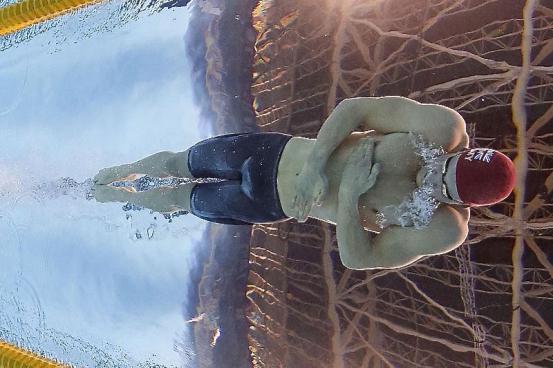
Adam Peaty – 57.13 – something to smile about – by Patrick B. Kraemer
Jazmin Carlin on the way to one of her silvers – by Patrick B. Kraemer
Palmer deserves a special prize for speaking up that day. The consequence has been monumental. Twenty years on, Adam Peaty, two when the blocks started to build, arrives back at Heathrow aboard victoRIOus and emerges to say that head coach Bill Furniss, a man who was the ‘amateur’ head coach of the 1992 Olympic swim team and knows very well what the last quarter-century journey of British sport has been like, told him “you might feel alone in the call room but …”
Peaty did not finish the thought. He noted instead how daunting it can be when you line up to race with giants such as Michael Phelps (who was racing in his first Olympic final at 15 when Peaty was 6 and had six of his 23 gold medals by the time Peaty was 10.
Those unfinished words were clear: but … know that you’re not alone. Peaty knows it. He says:
“The great thing about being British is that we never walk alone. I knew that the people back here had supported me, were right there with me wantingh me to succeed. That’s big. Britain had never had a gold in 28 years [in the pool] and I wanted to get that for the people back home. I hope that’ll be an inspiration for many more to go for it in the future.”
Peaty’s 100m breaststroke gold, the first for Britain in Rio and delivered with two world records, had carried momentum for the whole team – and that reflected what his coach Mel Marshall had told him many a time in training “every day when I’m on that last set and I’m dead and she says that to me ‘carry the momentum with you’.”
Some of that momentum started in 1996 when Britain got it: the money won’t win the medals but it will pay for the environment in which medals can be won.
Peaty’s words, or as close as you can get, were also spoken by Palmer 20 years ago but the meaning of “support” and the “folk back home” has stepped up several levels.
At Heathrow, a lady from China TV asked politely and with not a little humour: “The difference in population China and UK is … and we have a national system of sport. So what is the reason you beat us?”
Yes, said Bill Sweeney, chief executive of the British Olympic Committee, with a respectful chuckle, “China is a little bit bigger than us”.
It came down to this: if the athletes had done an “amazing job” in Rio and were “as exemplary off the field of play … outstanding ambassadors for the country” – and in the face of challenges “that were well documented” – then look at what made it all possible: ” … meticulous planning over a very long period of time”.
Leadership, management, the planning that gets the athlete to the blocks ready to perform at best. Said Sweeney:
“We have a great strategy in place and we’re seeing the rewards of 20 years of work.”
Twenty years of work. That says it all, for this result transcends a time of Peaty and Co, it even transcends Mel Marshall as an athlete and then coach.
Britain’s Rio success does not only belong to Rio: it belongs to the national teams of 1996, 2000, 2004 and 2008, as well as 2012; to the coaches who travelled a path strewn with obstacles; it belongs to the likes of Bill Sweetenham and all others who helped Britain to identify some of those obstacles and blow them off the road; it belongs to Paul Palmer and his coach Ian Turner, too.
Palmer was inducted into the University of …
continue reading in source www.swimvortex.com